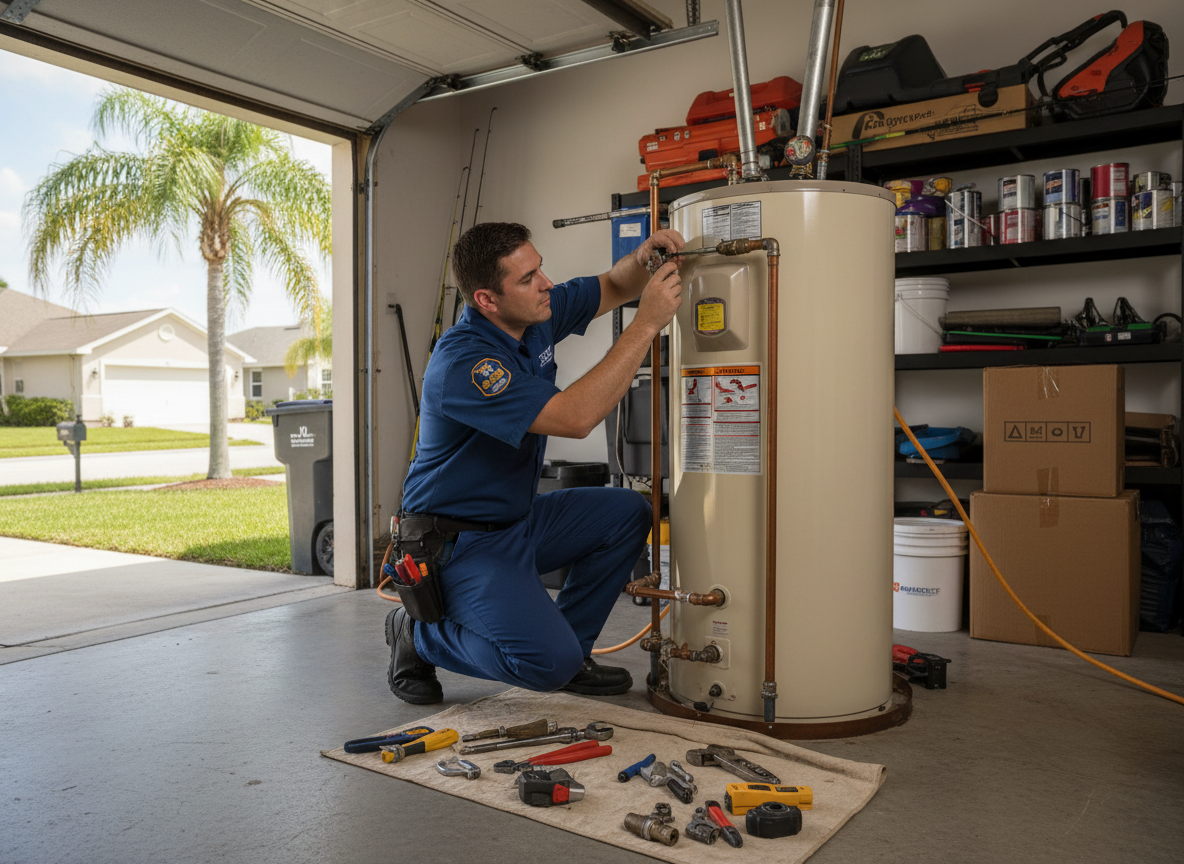
Downtown Tampa is a different kind of service visit from a house. Most water heaters here live in a utility closet, a mechanical room or a ceiling void inside a condominium or apartment building, and getting to them involves building management, a service lift and sometimes a booked window.
The diagnosis does not change, but the logistics do. The unit's make, model and fuel type are confirmed from the rating plate before the visit where possible, so the right parts and the right number of people arrive together. A replacement in a high-rise also means planning how the old tank leaves the building.
Where a heater serves a single flat, the fault is usually one of the ordinary ones: an element, a thermostat, a control valve, a scaled tankless exchanger. Where it serves a shared system, the scope is agreed with whoever manages the building.
Building rules are the main difference here. Many towers require a certificate of insurance before a contractor can bring tools past the lobby, restrict work to certain hours, and insist that water be shut at a riser rather than at the unit. Those requirements are worth confirming with management early rather than on the morning of the visit.