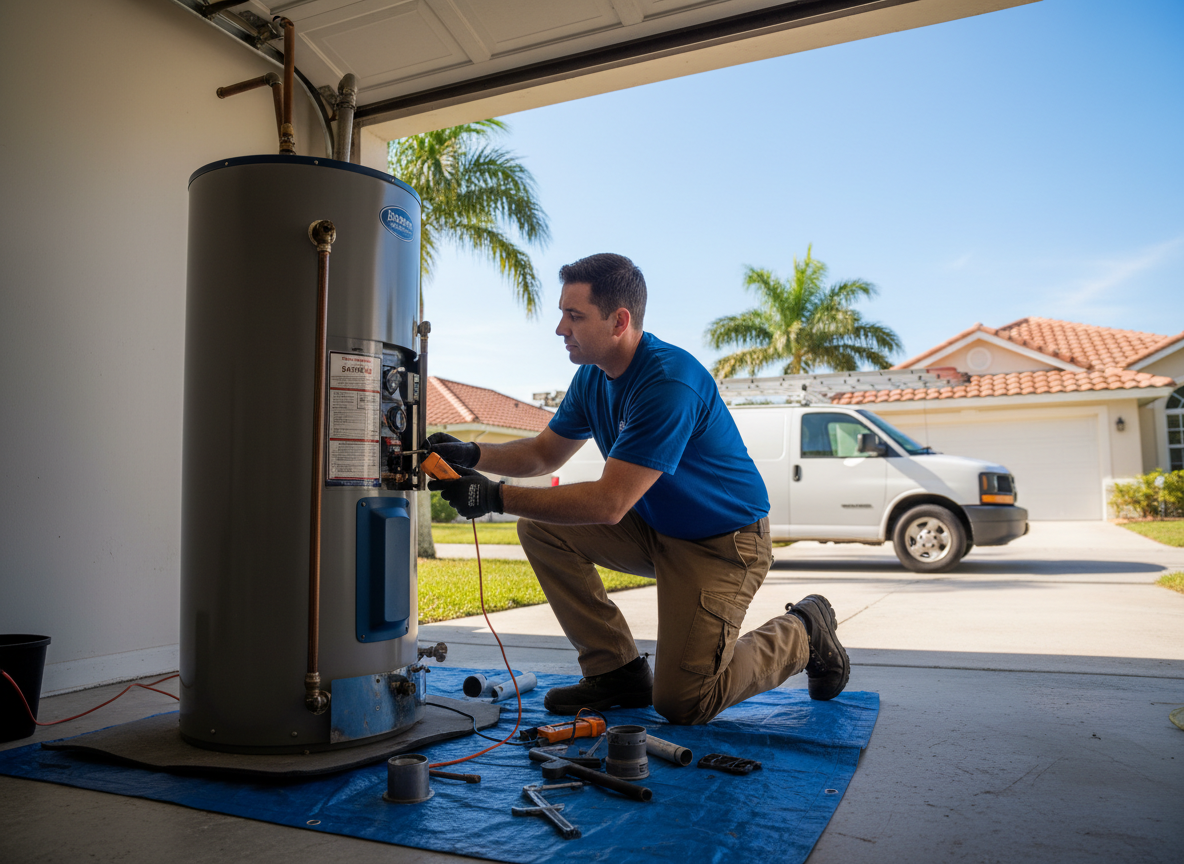
Seminole Heights is the neighbourhood most associated with Tampa's bungalow era, and the City of Tampa's own design guidelines trace the style's local popularity to the approach of the 1920s. Those houses were built long before anyone planned a serviceable space for a fifty-gallon tank, so the water heater usually ends up in the least useful corner of the plan.
Practically, that means narrow doorways, a closet shared with a water softener or a washer, and a flue that takes the shortest possible route out. On a gas unit, a short vent with the wrong slope or a termination too close to a window is a safety issue rather than a cosmetic one, and it gets checked before the unit is pronounced healthy.
Older pipework around the heater is common too. Galvanised or ageing copper at the connections can fail when a tank is disturbed, so the fittings are inspected as part of the job and replaced where they are already tired.
Because so many of these houses have been extended at the back or converted at the side, the water heater often sits further from the bathroom than the original plan intended. Longer hot runs mean more standing water in the pipe, so a delay at the tap is not automatically a heater fault. It is worth measuring before a unit is condemned for a problem that belongs to the piping.