Tampa water heater work
Water Heater Repair Tampa FL
Tank and tankless water heaters, gas and electric, across Tampa and Hillsborough County. The company is based at 3816 N Arlington Ave, Tampa, FL 33603, USA, a short drive from Seminole Heights, Tampa Heights and West Tampa, and each job starts by working out what the heater is actually doing before any part is chosen.
- Tank, tankless and heat pump systems
- Gas and electric
- Tampa and Hillsborough County
About Water Heater Repair Tampa FL
Water Heater Repair Tampa FL is a water heater business at 3816 N Arlington Ave, Tampa, FL 33603, USA.
The work is domestic hot water only: tanks, tankless units, heat pump systems, and the fittings, venting and safety devices around them.
- Based at 3816 N Arlington Ave, Tampa, FL 33603, USA
- Repair, installation and replacement of tank and tankless units
- Gas, electric and heat pump water heaters
- Diagnosis before parts are chosen
- Coverage across Tampa and Hillsborough County
- Scope explained before work starts
Water Heater Repair Tampa FL
Tampa, FL
What the company does
Water Heater Work in Tampa, Florida
1
Specialist services
12+
Areas covered
Written
Scope
What Tampa Homes Need From Water Heater Work
A water heater is one of the few appliances in a house that runs every day, holds pressurised water, and can quietly damage a ceiling, a closet floor or a garage slab before anyone notices. The approach on these pages is built around that reality: find the fault, confirm it, explain it, then fix it. The points below are the practical differences that approach makes on a Tampa job.
Diagnosis Before Parts
A cold shower can come from a failed element, a tripped breaker, a bad thermostat, a gas valve that will not open, or a dip tube that has broken off inside the tank. Fitting a part before testing which of those is true wastes the customer's time and money. Testing comes first.
Tank and Tankless Handled Together
Tankless units fail in their own way: scale on the heat exchanger, a stuck flow sensor, a fouled igniter, an error code from a blocked vent. A company that only knows tanks tends to recommend replacement when a tankless unit needs descaling and a sensor.
Attic and Closet Access Understood
Plenty of Tampa heaters sit in attics, second-floor chases and tight utility closets. That changes the access plan, the pan and drain requirements, and what a leak looks like. It also means the technician has to plan the route before dragging a 50-gallon tank through a hallway.
Hard Water Taken Seriously
Tampa's finished water averages roughly 185 mg/L of hardness, about 10.8 grains per gallon, according to the city's 2024 water quality report. That scale settles on elements and tank bottoms, which is why rumbling, popping and shortened element life are common here.
Permits Treated as Part of the Job
Replacing a water heater in Tampa generally requires a permit, issued through City of Tampa Construction Services inside the city limits or Hillsborough County Building Services for unincorporated addresses. A replacement handled properly accounts for that step rather than leaving it to the homeowner.
Gas and Electrical Safety Respected
Gas connections, flue joints, combustion air and electrical bonding are not areas for improvisation. Where a repair touches fuel supply, venting or a dedicated circuit, the work is done to code and inspected rather than patched and left.
Repair and Replace Explained Honestly
Sometimes a repair is the right decision and sometimes it is throwing money at a tank that is already failing. The customer gets the reasoning either way, including what the age of the unit and the condition of the tank shell suggest.
Storm Season Factored In
Atlantic hurricane season runs from June 1 to November 30, and Tampa's summer brings heavy rain, lightning and power interruptions. A heater that has been submerged, surged or left sitting in a flooded garage needs to be assessed before it is switched back on.
Coverage
Tampa Areas Covered From N Arlington Ave
How a job runs
From first symptom to a working heater
Describe the Symptom
The starting point is what the heater is doing: no hot water, not enough hot water, water on the floor, a noise, a smell, an error code, or a breaker that will not stay set. The address and the type of unit narrow the visit before anyone arrives.
Confirm the Unit and Its Location
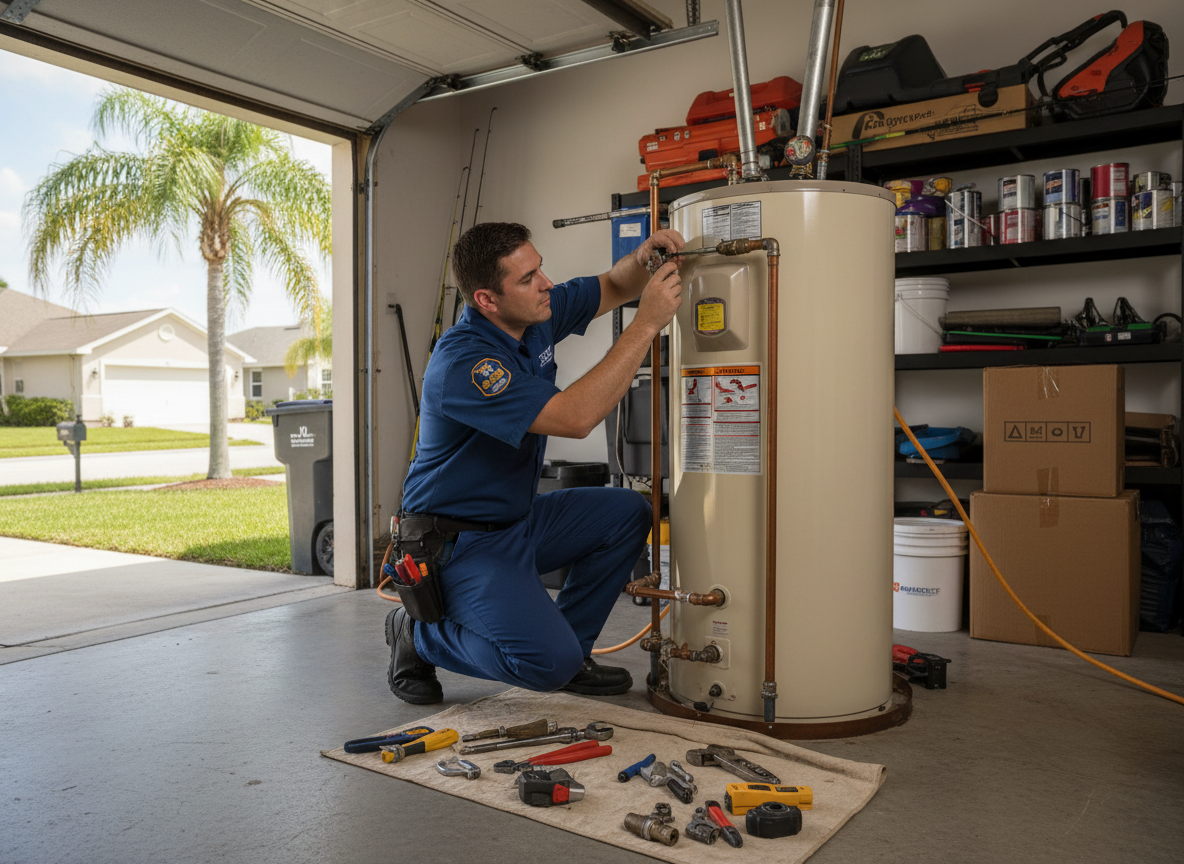
On site, the technician records the make, model, capacity, fuel type and age, and notes where the unit sits: garage, closet, attic or exterior alcove. That determines access, venting, drainage and whether a pan is required.
Test in Sequence
Power or fuel is checked first, then the controls, then the heating components, then the tank and its connections. Water pressure and thermal expansion are checked where a relief valve is weeping. Each result rules something out.
Explain the Finding
The fault is described in plain terms, along with what it means for the rest of the unit. If there is more than one viable path, both are explained, including what each one assumes about the condition of the tank.
Carry Out the Work
The agreed repair, replacement or installation is completed, with the water shut off and the area protected first. Old parts are shown where it helps, and the area is left dry and clear.
Test and Hand Over
The unit is refilled, purged of air, brought up to temperature and checked for leaks at every connection. Settings, shutoff location and any maintenance the unit needs are explained before the technician leaves.
Water heater notes
Water Heater Guides for Tampa Homes
Common questions
Water Heater Questions From Tampa Homeowners
The contact page lists the business address and the areas covered.